Boston Metro
Based on the 2020–2024 ACS 5-year estimates, approximately 30,668 veterans live in the 17 Boston Metro cities and towns, including 3,215 women. This page includes local event listings and directories for Boston Metro area veterans’ services; VA-accredited representatives, agents, and attorneys; VA healthcare facilities; veteran outreach centers; veterans’ posts and auxiliaries; elder services; collaboratives; and veteran census, veteran homelessness, and housing data.
When you submit events, use the greater-boston and boston-metro tags so they automatically show up on the Merrimack Valley and Northeast regional pages. The listing below has links to see events at the city and town level. As long as you include the city or town where your event is taking place within the event description, it will appear in the relevant local listing.
Local Event Listings
Local Recovery Meetings

The mission of the Massachusetts Executive Office of Veterans’ Services (EOVS) is to act as the primary advocate on behalf of all the Commonwealth’s veterans. The Office provides outreach and support through various programs. EOVS offers assistance to eligible veterans and their surviving spouses through the MassVets Financial Benefits Program, administered by local veterans’ services.
local Veterans’ Services
Veterans’ Services Districts
Veterans may use the Mass Vet Benefit Calculator to see what they may qualify for and contact their local veterans’ services office to apply. MGL Chapter 115 requires each town/city have a veterans’ agent to administer these benefits. Many municipal veterans’ services office also have VA-accredited staff to assist with federal benefit claims.
Office Hours for Veterans Benefits
VA-Accredited Representatives, Agents & Attorneys
The directory below includes VA-accredited representatives, agents, and attorneys based in North Shore cities and towns from the VA Office of the General Counsel (OGC) Accreditation Search Tool, updated on a weekly basis. Accreditation ensures VA claimants receive qualified assistance aligned with VA Standards of Conduct. Attorney listings also include available official state bar data, license status, registration dates, and disciplinary history, updated on a monthly basis.
Boston Metro VA Healthcare Facilities
Boston Metro area veterans are served by the VA Bedford and VA Boston healthcare systems. VA Boston’s Jamaica Plain and West Roxbury campuses, the Lynn outpatient clinic, and the Boston Vet Center are located in the area. Anyone who has served in the military is encouraged to apply to determine their eligibility and Priority Group. Some veterans are exempt from co-pays.
New England Center & Home for Veterans
Located in Downtown Boston, the New England Center and Home for Veterans (NECHV) offers comprehensive supportive services to veterans of all ages and eras throughout the region. Operating 24/7, the Center is helps veterans overcome challenges, secure meaningful employment, and transition into dignified independent living. NECHV provides residential stabilization programs, clinical and behavioral health support, and outreach to prevent veteran homelessness. To learn more or access services, veterans can click here or call (617) 371-1800 anytime.
Harvard Street Veterans Outreach Center
Supported by EOVS, the Harvard Street Veterans Outreach Center serves as a community hub in Dorchester for Greater Boston veterans and their families offering comprehensive primary care, behavioral health services, health insurance navigation, and direct connections to housing and legal aid. Beyond medical needs, it functions as a drop-in center featuring an on-site food pantry, computer lab access, and workforce development support. Veterans can schedule an intake appointment online or call (617) 825-3400.
Boston Metro Veterans’ Posts & Auxiliaries
The Veterans Posts and Auxiliaries directory includes information about the VFW, American Legion, AMVETS, and United American Veterans Posts, Marine Corps League Detachments, and DAV Chapters based in Boston Metro area cities and towns, as well as information about their auxiliaries and other affiliates.
Posts
Auxiliaries
Boston Metro Elder Services
Aging Services Access Points (ASAPs) are private, non-profit agencies established under MGL Chapter 19A. ASAPs provide direct and protective services, including information and referrals; interdisciplinary case management; intake and assessment; developing, implementing, and monitoring service plans; reassessing needs; and investigating reports of elder abuse and neglect.
MassOptions is a service of the Executive Office of Health & Human Services (EOHHS) that can also help older adults, people with disabilities, and family members or caregivers identify aging and disability services and connect to those that can meet their needs. Call (800) 243-4636 or click here to complete a referral.

Meal Delivery Program for People with Cancer
Magnolia is a free meal delivery program that provides nutritious meals to people living with cancer and their families living within approximately 25 miles of Cambridge. There are no financial requirements to participate in the program, but to qualify people must:
be undergoing chemotherapy, radiation therapy (excluding radioactive iodine treatment), hormone or targeted therapy, including immunotherapy;
have had surgery, chemotherapy, radiation or targeted therapy in the last three months, including immunotherapy;
have been discharged from a cancer-related hospitalization in the last three months; or
be receiving adjuvant or neoadjuvant treatment (ie, add-on therapy before/after main therapy).
If you think someone meets the program criteria, please ensure they live within Hanscom AFB or the towns listed here, which includes the following cities and towns in the Boston Metro area:
Arlington, Belmont, Boston, Cambridge, Chelsea, Everett, Lynn, Malden, Medford, Newton, Saugus, Somerville, and Waltham.
Greater Boston Veterans Collaborative
-
After our first summit in Boston in January 2015, the group quickly expanded beyond Boston Metro service providers into the GBVC. GBVC organized dozens of in person summits to gather information and resources and work to identify and address key challenges and gaps in services and outreach. The core team developed shared infrastructure, including this website, the shared calendar and network directory embedded in it, and the shared slack, now expanded and maintained by the statewide Veterans Collaborative.
In March 2020, the GBVC quickly shifted to convene virtual summits, which the Veterans Collaborative continues to host on a monthly basis to create space for service providers to connect, share resources and information, identify gaps and emerging issues, gather and share data, and work to ensure services are understood and accessible to those who need them, when they need them. These summits include an orientation to the shared resources so that regional collaboratives and service providers can leverage them for impact across the state.
GBVC Board of Directors
The GBVC incorporated as a nonprofit during the pandemic in June 2020 and launched the statewide Veterans Collaborative project. Ellen Sullivan, Christopher Feugill, and Shimon Warden currently serve on the GBVC Board of Directors.
Past board members include Rachel McNeill (2020–2025, President & Board Chair), Bob Notch (2020–2024, President), Hanna Tripp (2021–2025, Treasurer), Lino Covarrubias (2021–2025, Development Chair), Wesley Sanders (2022–2025, Secretary), Marika Solhan (2022–2024), and Jayson Gilberti (2020–2021, Secretary). Past Steering Committee members are listed here.
Boston Metro Veterans Census Data
Based on the 2020–2024 ACS 5-year estimates, approximately 30,668 veterans live in the 17 Boston Metro cities and towns covered by this field guide. Veterans make up about 2.3 percent of civilian adults age 18 and older, or 1.9 percent of the total population.
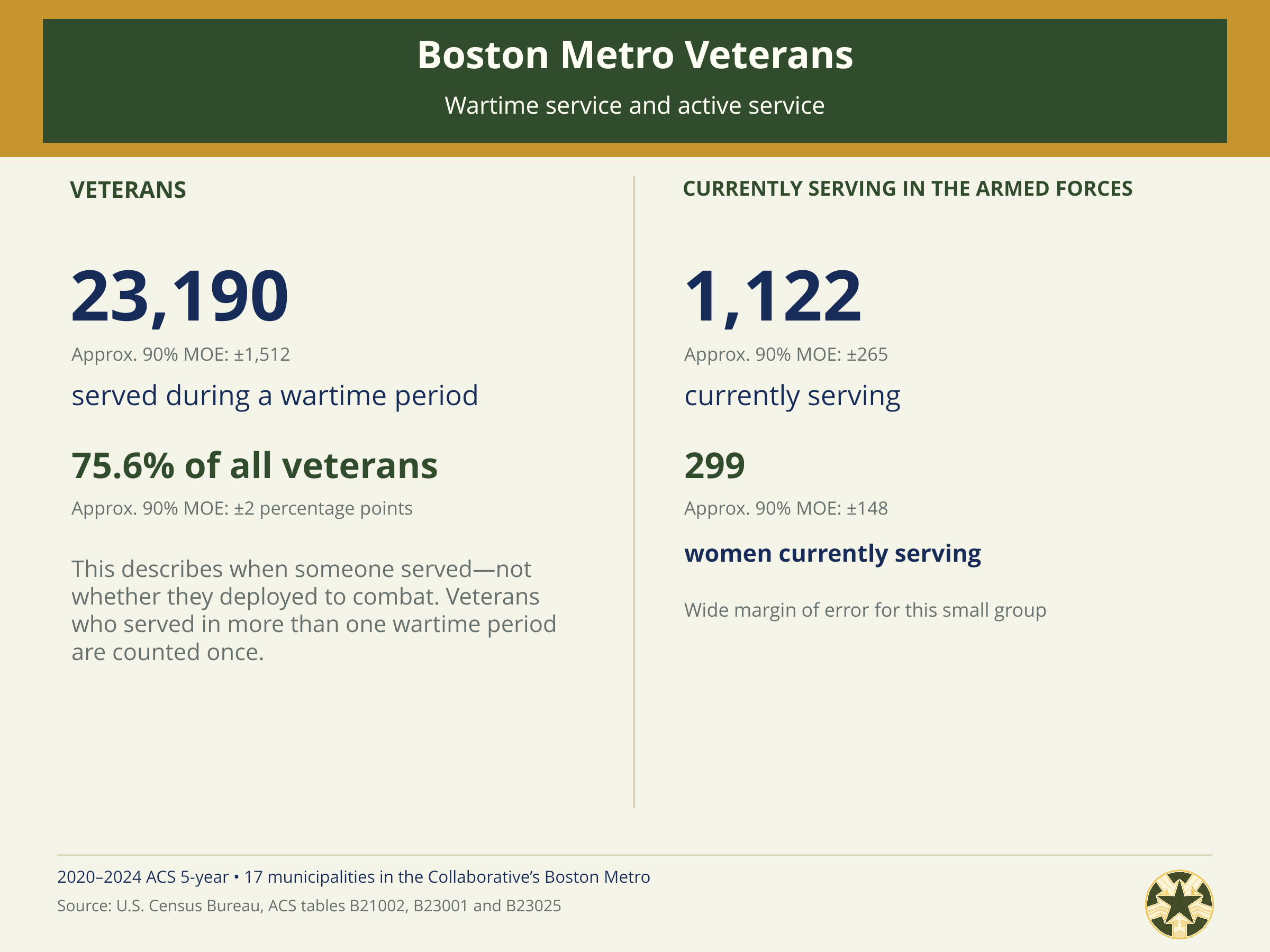
Women account for approximately 10.5 percent of veterans in the area (3,215). Around 53 percent of veterans overall are age 65 or older (16,111), compared with 19 percent of women veterans (605). Around 76 percent of veterans served during a wartime period (23,190). An estimated 1,122 people are currently serving in the Armed Forces, including 299 women.
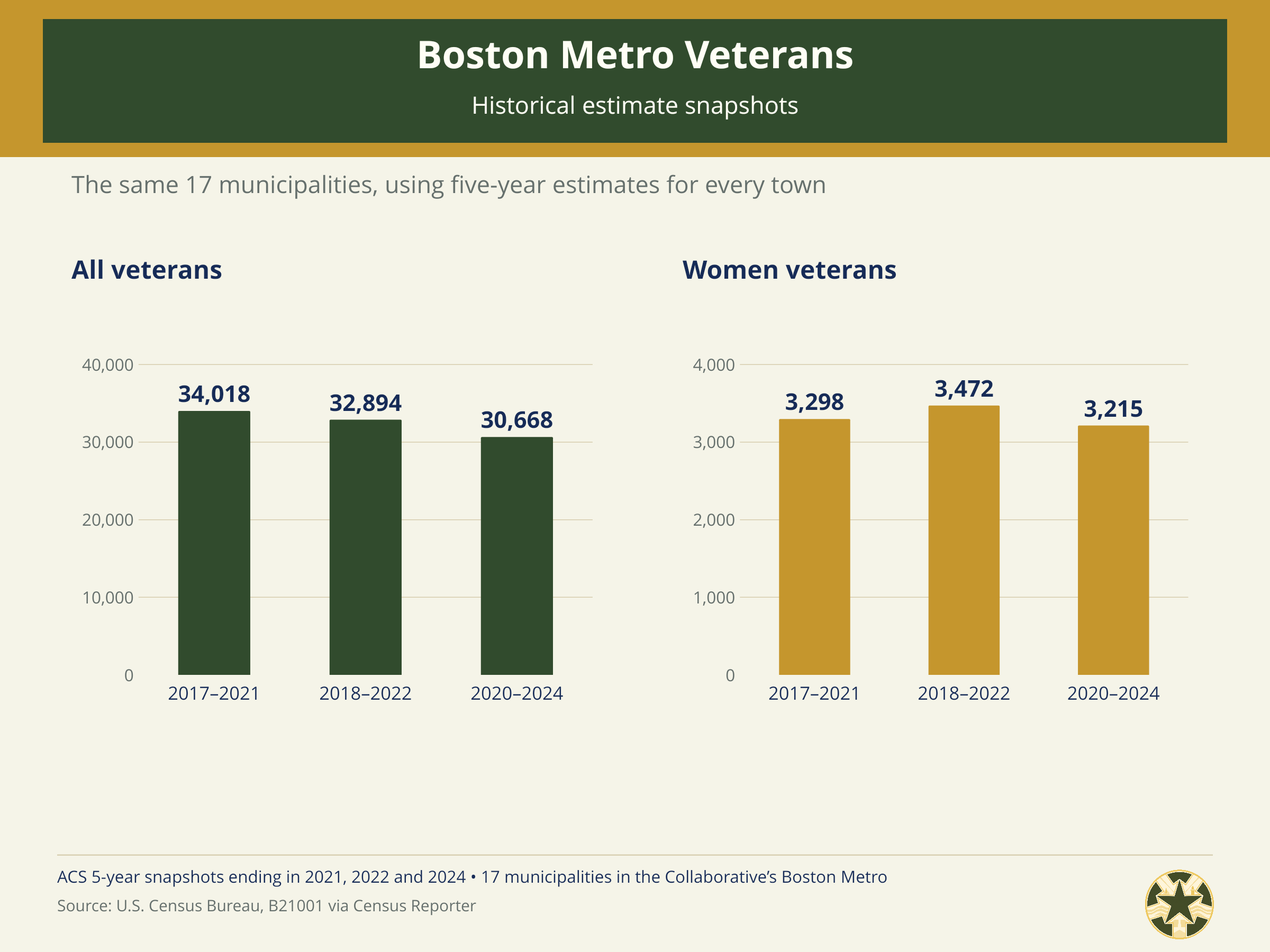
Between the 2021 and 2024 ACS estimates, the estimated veteran population in Boston Metro cities and towns decreased by 9.8 percent, from 34,018 to 30,668. The estimated number of women veterans decreased by 2.5 percent, from 3,298 to 3,215.
These figures are based on responses to the American Community Survey. The 5-year estimates describe overlapping periods rather than individual years, and differences should be interpreted alongside their margins of error, especially for smaller population groups.
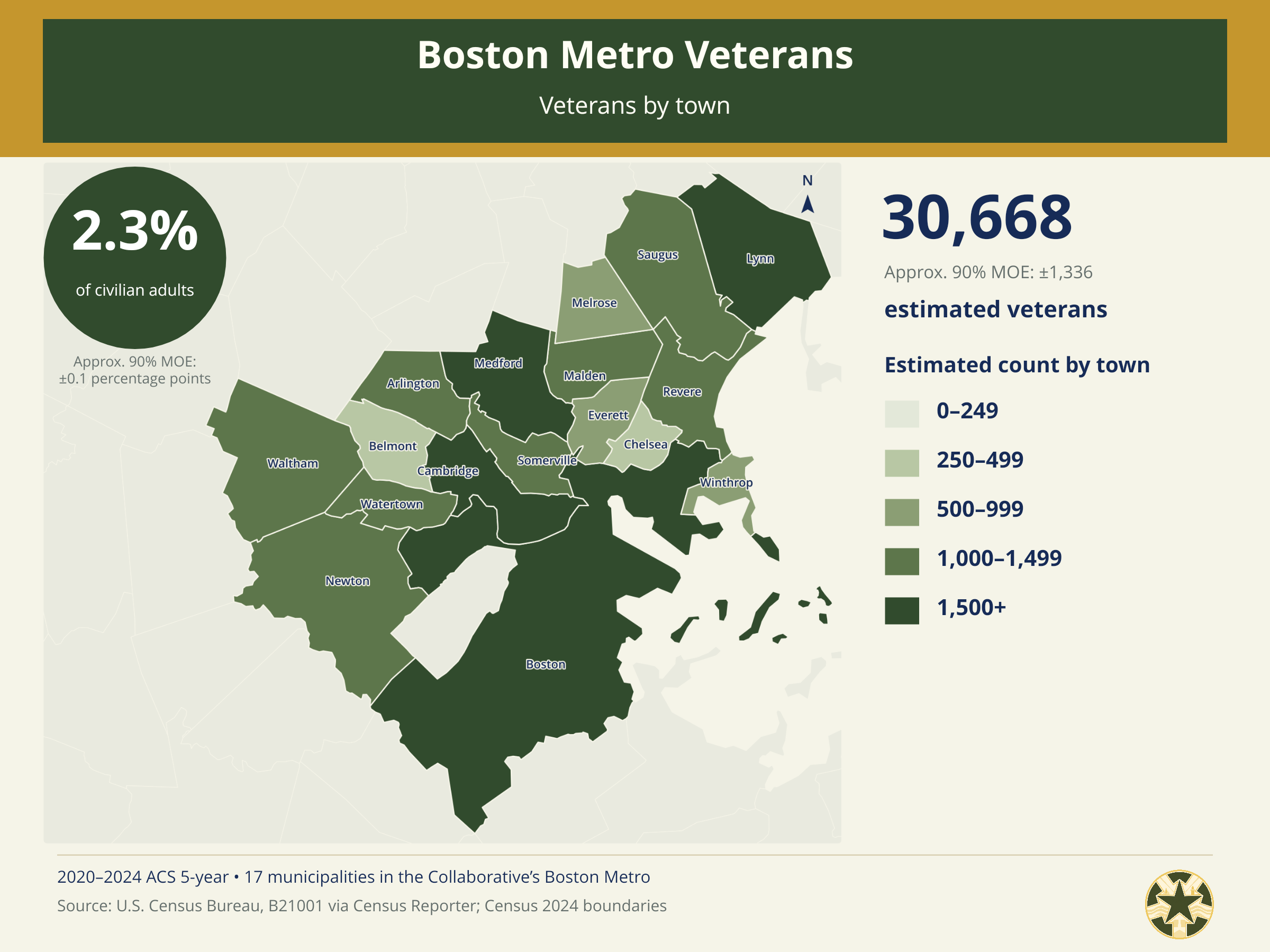
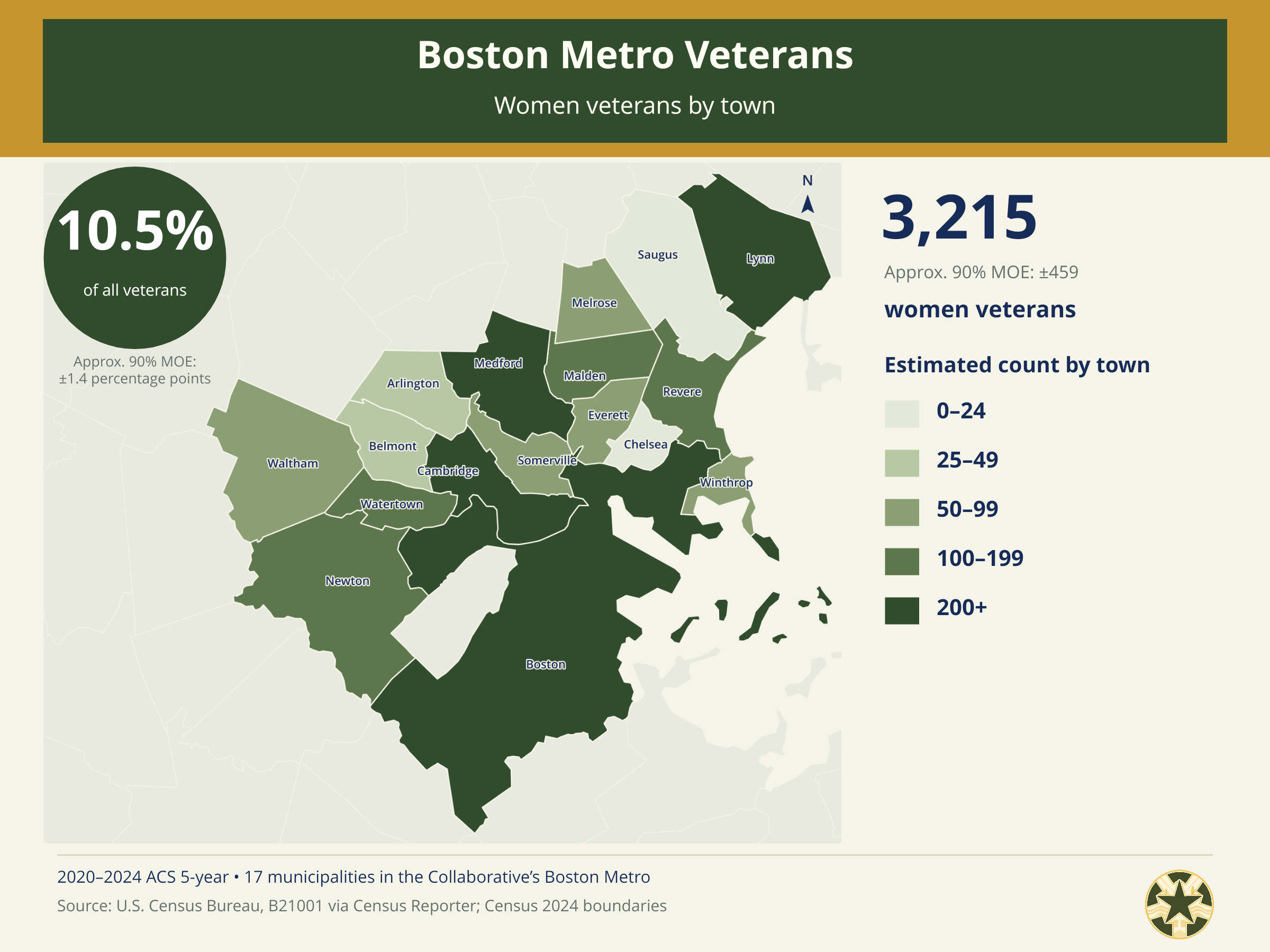
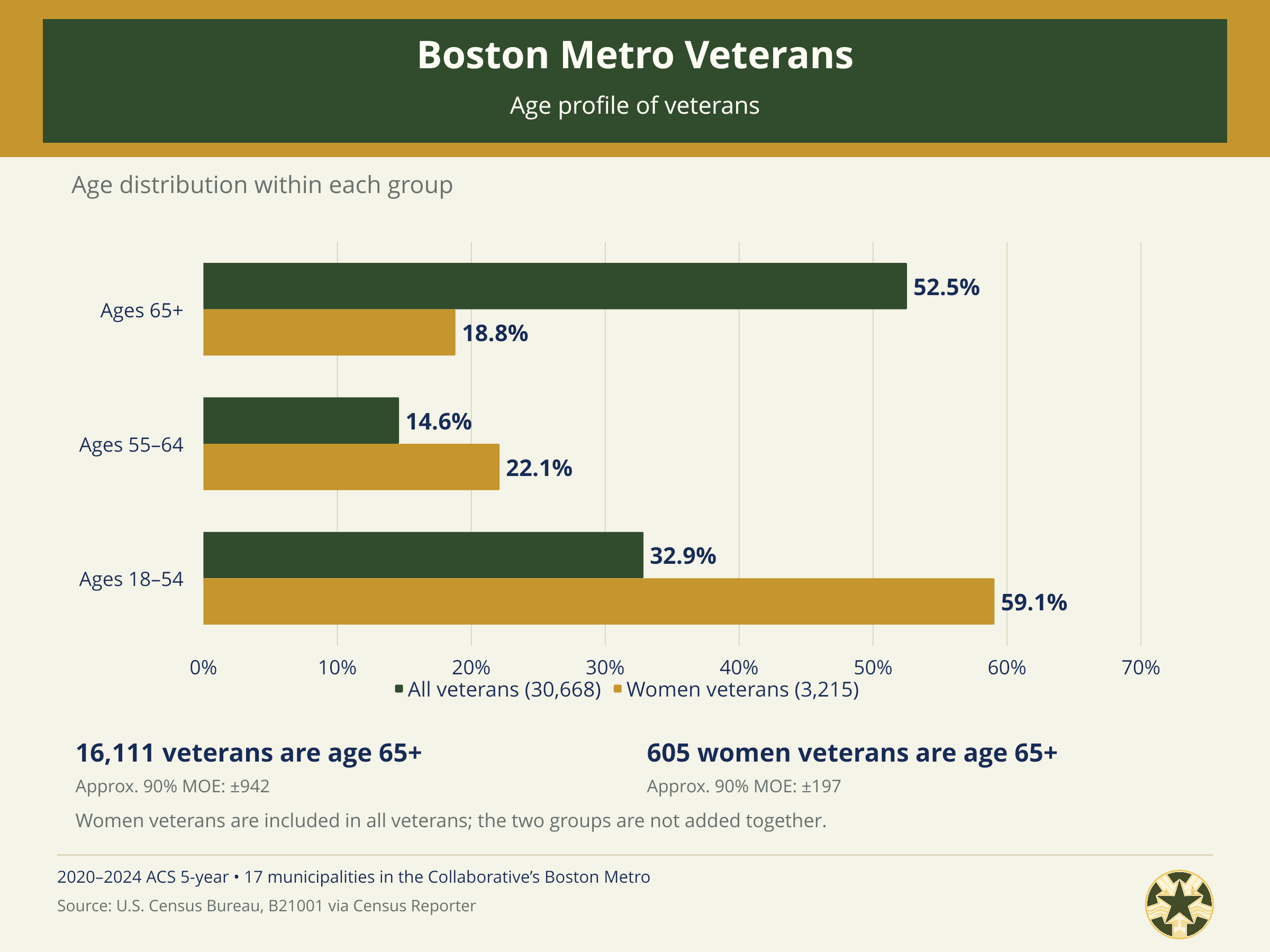
If you serve veterans and are trying to learn more about their demographics, you can explore the most recent ACS 5-year estimates (most reliable) from Census Reporter for cities and towns in Boston Metro at the links below:
For broader context, age, disability, veteran status, and poverty are available for Essex County, Middlesex County, Suffolk County, and Massachusetts using ACS 1-year estimates (most current). These 1-year figures are separate from the 5-year estimates used for this page.
Age, sex, and veteran status data are also available by race and Hispanic origin. The links below cover the same 17 cities and towns using ACS 5-year estimates, with whole-county data for Essex, Middlesex, and Suffolk Counties for broader context. These county links are not Boston Metro regional totals. County releases vary by table and population group; check the release shown before making comparisons. Estimates for small groups can have substantial uncertainty; review the margins of error alongside them.
White alone: cities and towns · counties
Black or African American alone: cities and towns · counties
American Indian and Alaska Native alone: cities and towns · counties
Asian alone: cities and towns · counties
Native Hawaiian and other Pacific Islander alone: cities and towns · counties
Some other race alone: cities and towns · counties
Two or more races: cities and towns · counties
White alone, not Hispanic or Latino: cities and towns · counties
Hispanic or Latino: cities and towns · counties
Hispanic or Latino includes people of any race. These categories overlap and should not be added together. ACS figures are estimates, and uncertainty can be substantial for small populations. Census Reporter includes margins of error alongside the data. These census links update as new releases become available; the figures presented here use the 2020–2024 5-year estimates; the page was updated in October 2026.
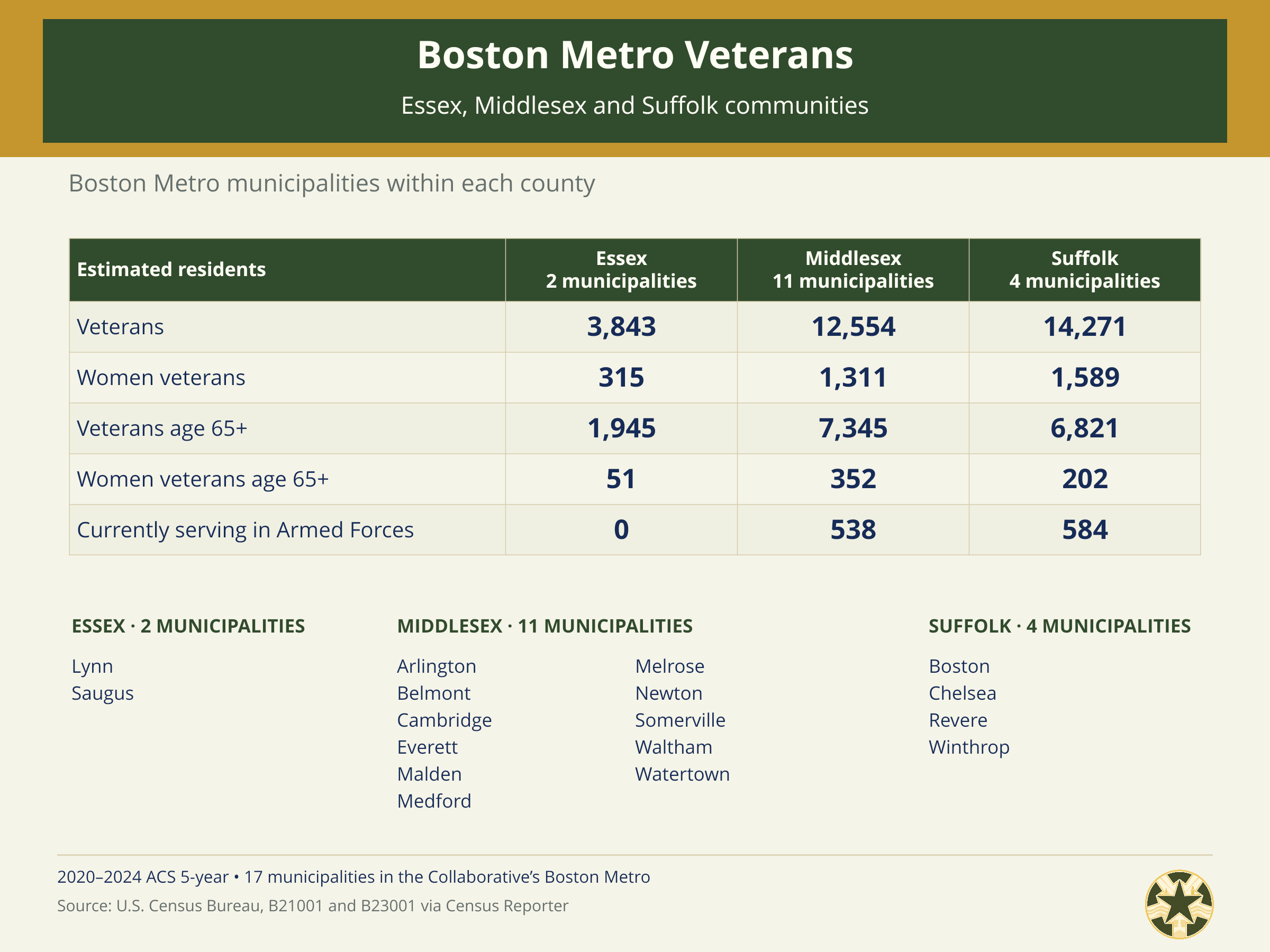
Around 13 percent of veterans in Boston Metro live in Essex County (3,843).
8.2 percent are women veterans (315).
74 percent served during a wartime period (2,845).
51 percent are age 65 or older (1,945), including 16 percent of women (51).
Around 41 percent of veterans in Boston Metro live in Middlesex County (12,554).
10.4 percent are women veterans (1,311).
78 percent served during a wartime period (9,832).
59 percent are age 65 or older (7,345), including 27 percent of women (352).
Around 47 percent of veterans in Boston Metro live in Suffolk County (14,271).
11.1 percent are women veterans (1,589).
74 percent served during a wartime period (10,513).
48 percent are age 65 or older (6,821), including 13 percent of women (202).
Veteran Homelessness in the Boston Metro Area
HUD’s Continuum of Care (CoC) Program is designed to promote community-wide commitment to the goal of ending homelessness. The Massachusetts CoC includes 12 regional CoCs, including five covering cities and towns in the Boston Metro Area:
South Shore (includes Quincy and Weymouth)
Balance of State (includes Arlington, Belmont, Braintree, Brookline, Chelsea, Everett, Malden, Medford, Melrose, Milton, Newton, Revere, Somerville, Saugus, Waltham, Watertown, and Winthrop)
During the last week of January, CoC’s count all of the homeless people reported by service providers and counted by local police and volunteer groups on the streets. In 2023, veterans made up around 3.4% of the overall homeless population, an increase from 2.2% in 2022.
From 2022 to 2023, the number of homeless veterans increased from 534 to 545, including 70 women, who made up 12.8% of homeless veterans counted. Veteran homelessness increased by less than 3% overall, with a 23% increase for women veterans.
Around 51% of homeless veterans in Massachusetts are in the Boston Metro area, including 66% of homeless women veterans.
The Boston CoC accounts for almost 35% of homeless veterans in the state, the largest proportion of any CoC, with the number of homeless veterans overall increasing by 5.6% and a 50% increase in homeless women veterans.
The Balance of State CoC accounted for only 8.4% of homeless veterans in the state, but over 56% of homeless women veterans in 2023. Women veteran homelessness in this area surged by almost 767%, with some counted as unsheltered.
Housing Advisory Council
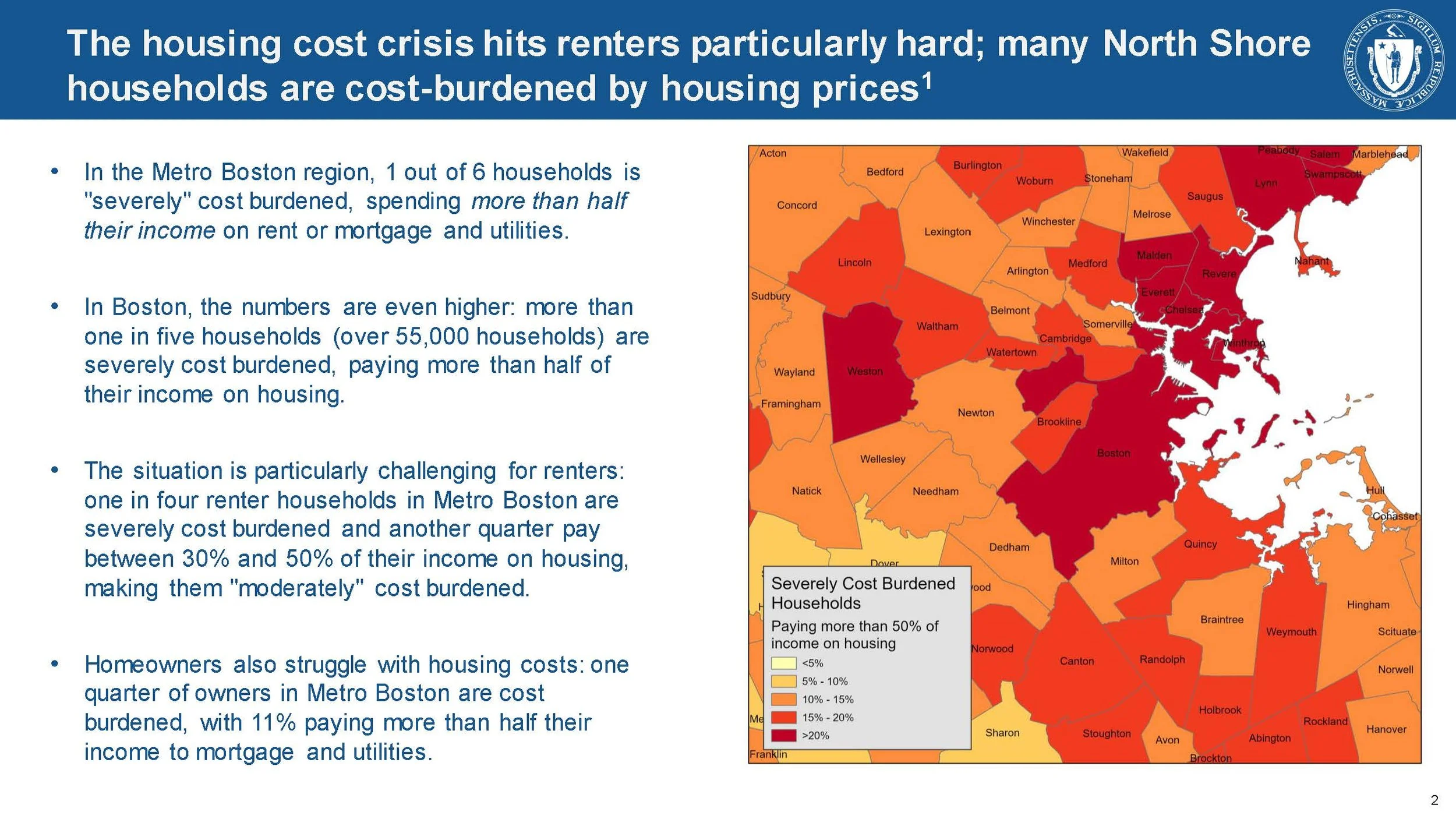
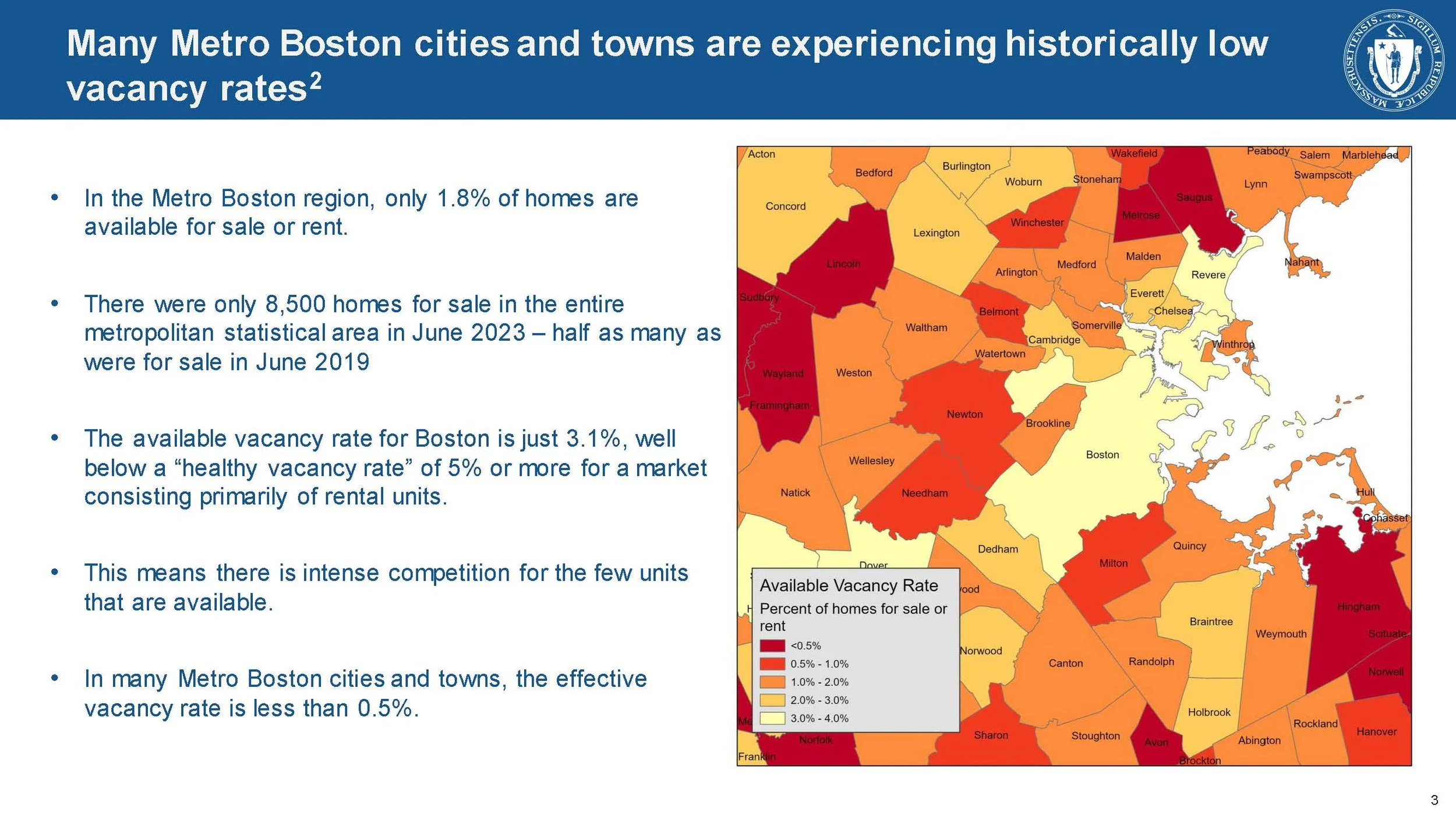
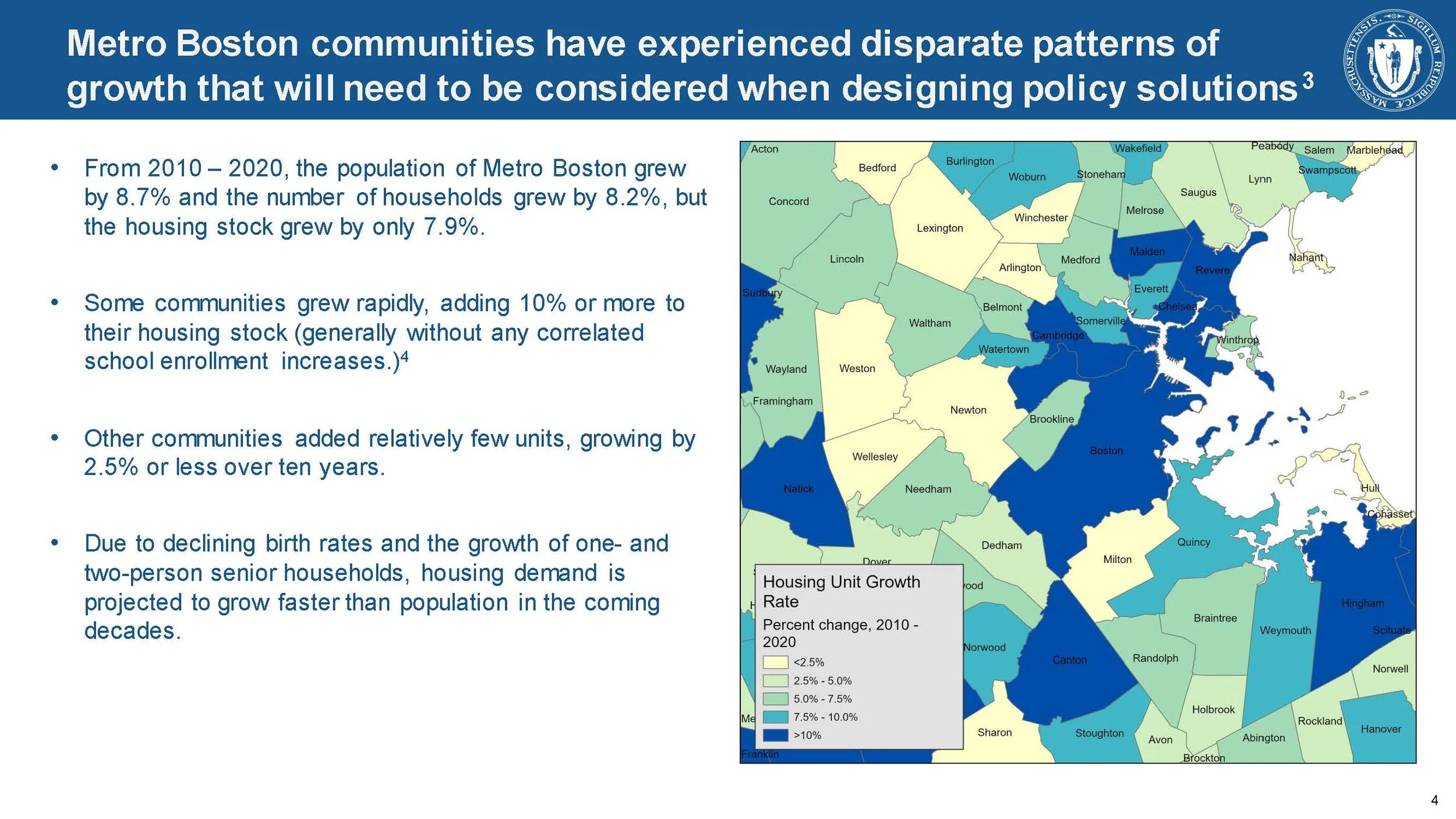
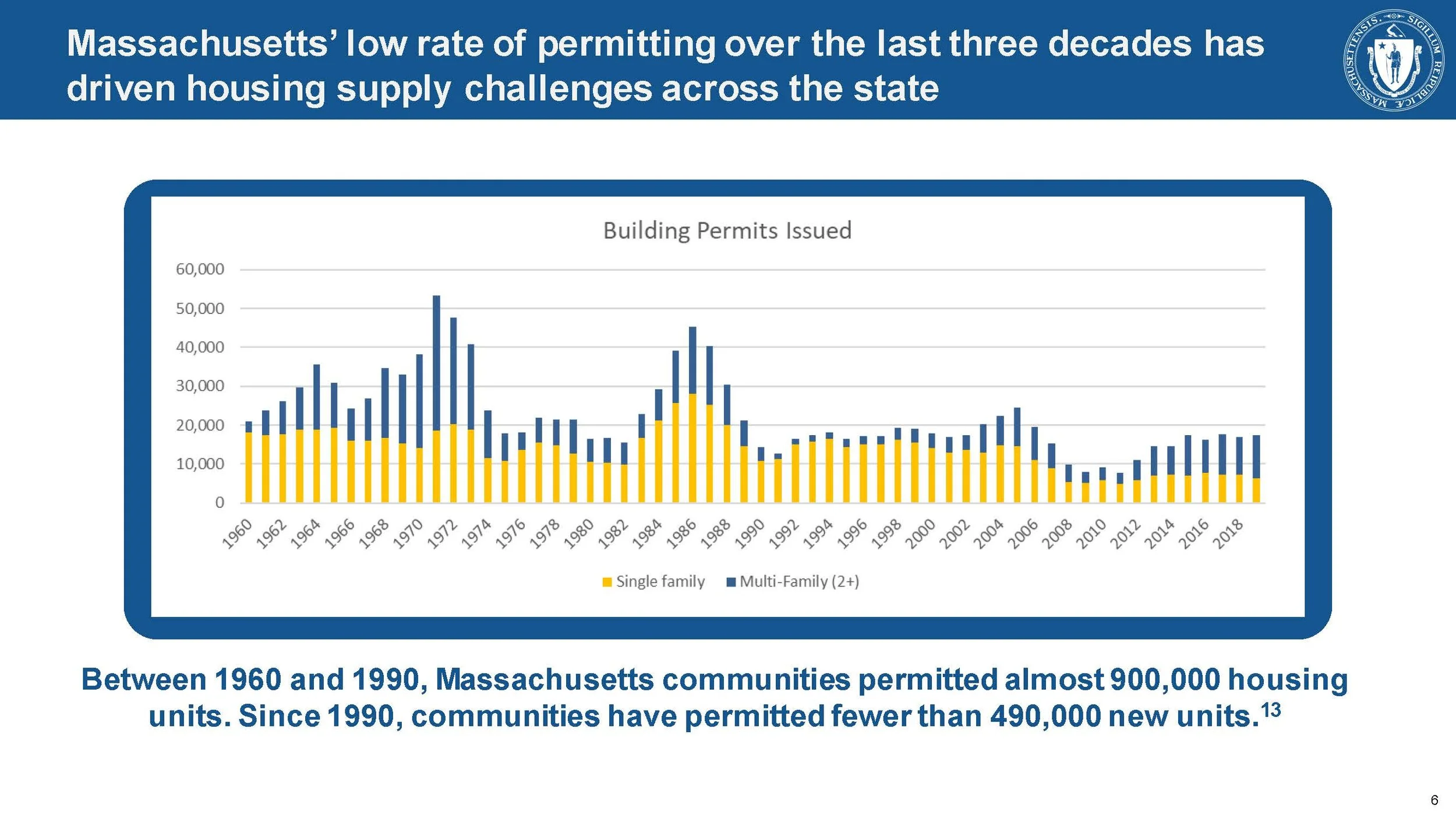
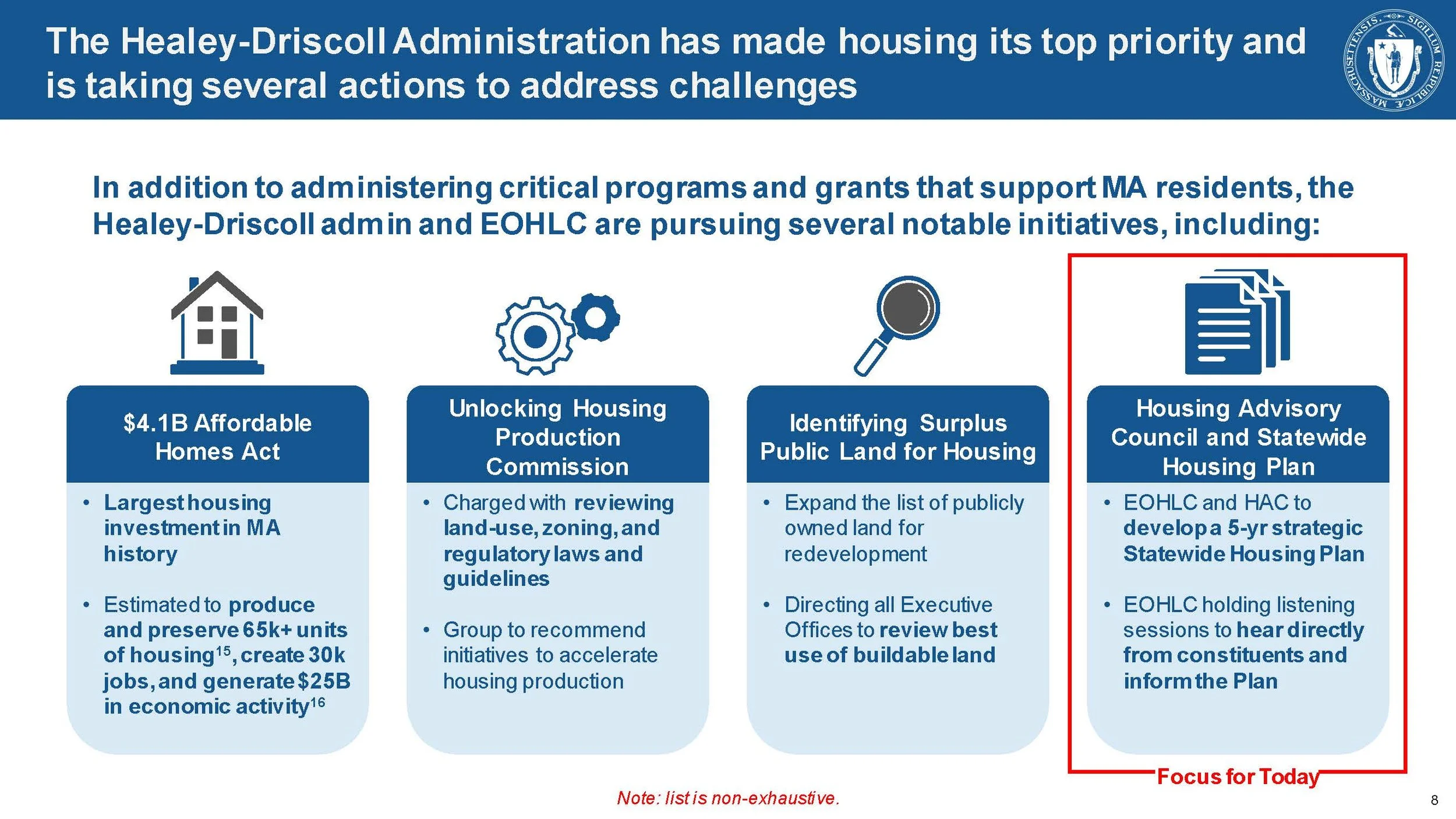
Established through Executive Orders filed in conjunction with the Affordable Homes Act, the Housing Advisory Council and Commission on Unlocking Housing Production is bringing together a broad range of stakeholders from across Massachusetts to advise the Healey-Driscoll administration on strategies to address the state’s housing challenges. A regional listening session was held in May 2024 (see the data below). If you missed them, you can still provide feedback here.